Advertising's AI Opportunity Isn't Just Creative. It's Making Media Spend Legible.
The AI conversation is stuck on copy. Kavita Sharma says operational AI matters more: it closes the gap between media spend and knowing what it actually bought.
.svg)
Generative AI writes the copy. Operational AI is what builds the business.


If this caught your attention, that’s not accidental.

The best editorial systems don’t happen by accident. Outlever builds them.


Inefficient processes and siloed systems are the two obstacles agencies name most when asked what stands in their way. That is the back office of the business, the layer the industry's AI conversation has mostly looked past, fixed on the copy layer where generative tools draft headlines and spin out variants.
Kavita Sharma, Founder and Growth Marketing Director at CARTXPERTS, has run media operations across close to 80 markets, and she puts the real inefficiency in the agency's back office. In her estimate, 60 to 70 percent of an agency's bandwidth goes into manual operational work: processing orders, managing publisher relationships, reconciling delivery against what was booked, and squaring invoices. That is the layer she thinks operational AI is about to change.
"Generative AI writes the copy," she says. "Operational AI is what builds the business."
The operations leakage
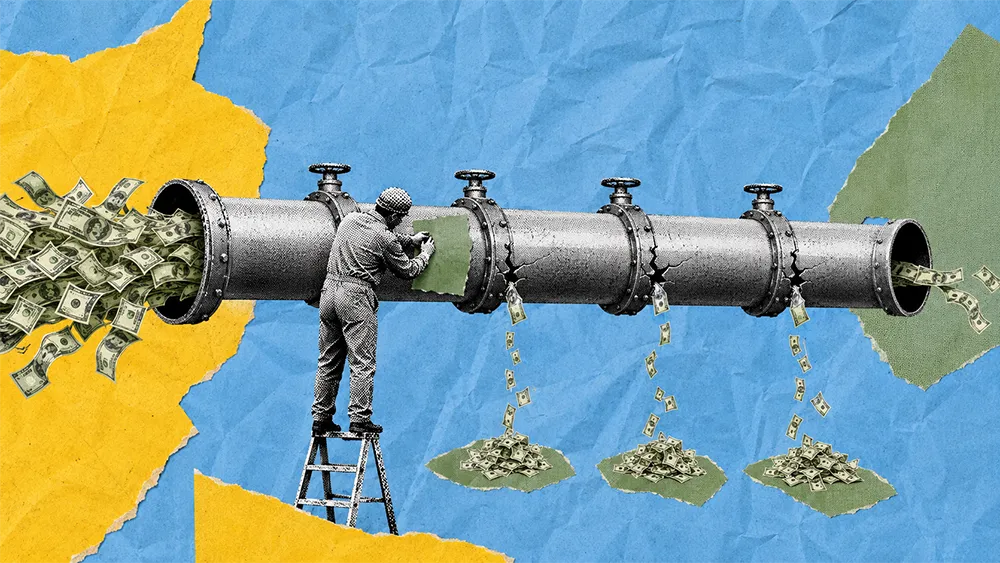
Operational AI is easiest to define by the chain it runs on: an order is placed, a publisher delivers against it, the delivery is reconciled against what was contracted, invoices are settled, and exceptions are resolved. Generative tools write the copy that rides atop that chain. The chain itself is where Sharma says the money goes missing, because each handoff is still largely manual, and manual work at that volume compounds into what she calls a direct leakage of money for both the client and the agency.
Reconciliation is where the leak shows most plainly. Run a bundle deal with a publisher instead of a straightforward spot buy, and matching what was delivered against what was contracted becomes, in her words, a nightmare. The publisher's data sits in one place, the media plan in a spreadsheet somewhere else, and someone tallies the two by hand. In the workflows she has seen, that cycle can run about two weeks. By the time the numbers close, the next campaign is already live, and the lessons from the last one have gone stale. The reckoning over agentic ad-buying has centered on the glamorous end of the business; Sharma is pointing at the ledger, and at the delay baked into it.
Closing the loop fast enough
The gain Sharma describes is not just speed for its own sake; it's how quickly an agency learns what its spend actually did and protects its bottom line in real time. A direct API connection pulls delivery data across programmatic platforms, search, social, and TV directly into the planning system. Beyond standardizing disparate formats and conventions, these intelligent workflows monitor live spend pacing to eliminate over-budget risks while campaigns are active.
When delivery data is auto-matched against contracted orders, discrepancies are flagged immediately for a human to review. "There is an intelligence layer which is filtering, and then there is a manual check at the final round," Sharma says. What used to be a two-week manual reconciliation cycle is crunched back into a couple of hours.
Shrinking that gap transforms agency operations. When reconciliation takes weeks, performance lessons arrive too late—the next flight is already live, running on the same blind spots. Pulling that cycle down to hours creates an active feedback loop, allowing agencies to optimize media spend while campaigns are still running rather than simply reporting on past performance. It also accelerates revenue recognition, preventing underdelivery, makegoods, or billing errors from lingering unresolved.
From media buyer to growth architect
Automating the close shifts where the control steps live. A human still confirms that the cost is attributed to the right publisher, matches pricing to what was actually offered, and resolves the delta between what was planned and what was delivered, which results in a make-good, an extra delivery the publisher owes, or a wash. Sharma points to larger agencies with heavier tech stacks as furthest along, testing planning tools like Mediaocean against publisher integrations; in her observation, reconciliation error rates can fall from around twenty percent toward ten over repeated cycles.
What she wants renamed is the job itself, from media buyer to something wider. The title of media buyer, she argues, should give way to something like growth architect, and she means a job redesign rather than a relabeling. In practice, that is a person who sets the commercial objective, judges the quality of the data and creative inputs, resolves the exceptions the system flags, and turns cross-channel performance signals into the next planning decision, which is the same reason experienced operators grow more valuable as the tooling spreads. Her closing target is the fragmentation itself: the advertiser who still sees spend in silos, unable to say what a dollar bought across channels. A multi-agent structure that reconciles the whole picture is what finally makes that legible, and it is a long way from writing ad copy faster.
Don’t miss the next one.
Get our latest pieces in your inbox. Leave whenever you want.