Rank Is Not Citation: AI Search Is a Separate Discovery Layer
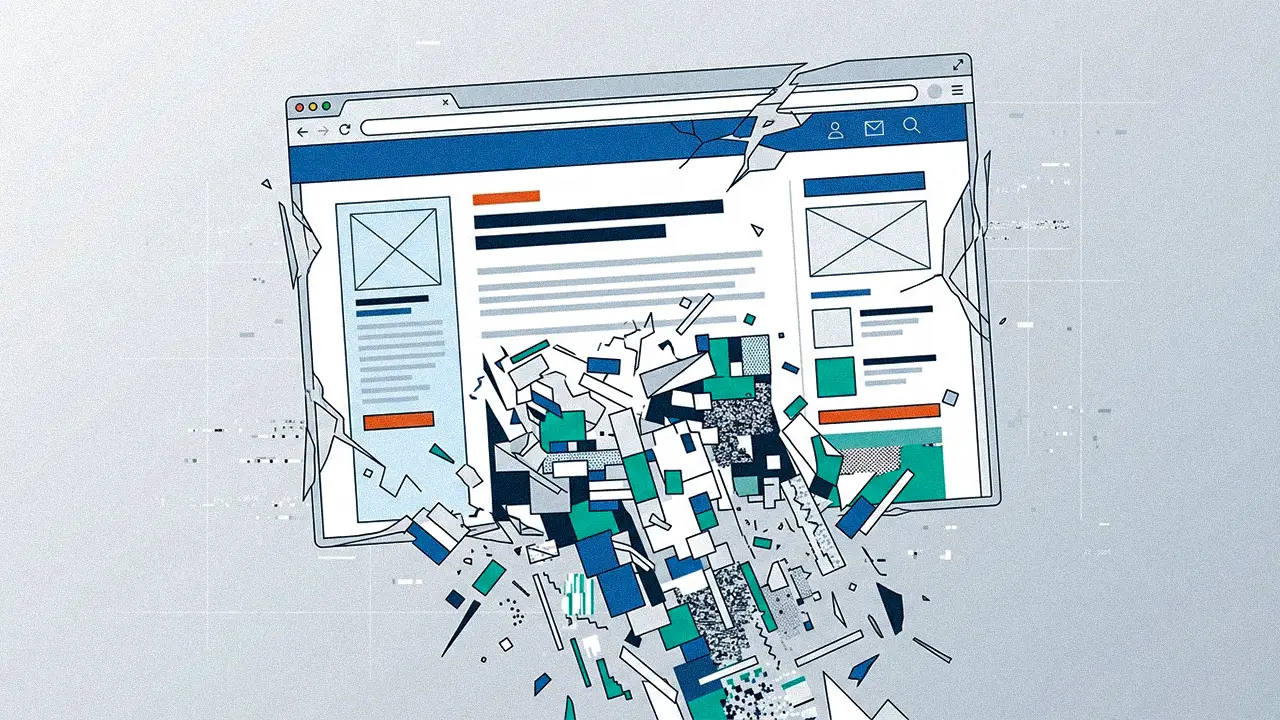
The 2026 citation studies keep landing on one finding the rank dashboards miss. A page can top Google and stay invisible in ChatGPT, or vanish from search and stay a chatbot regular.

If this caught your attention, that’s not accidental.

The best editorial systems don’t happen by accident. Outlever builds them.
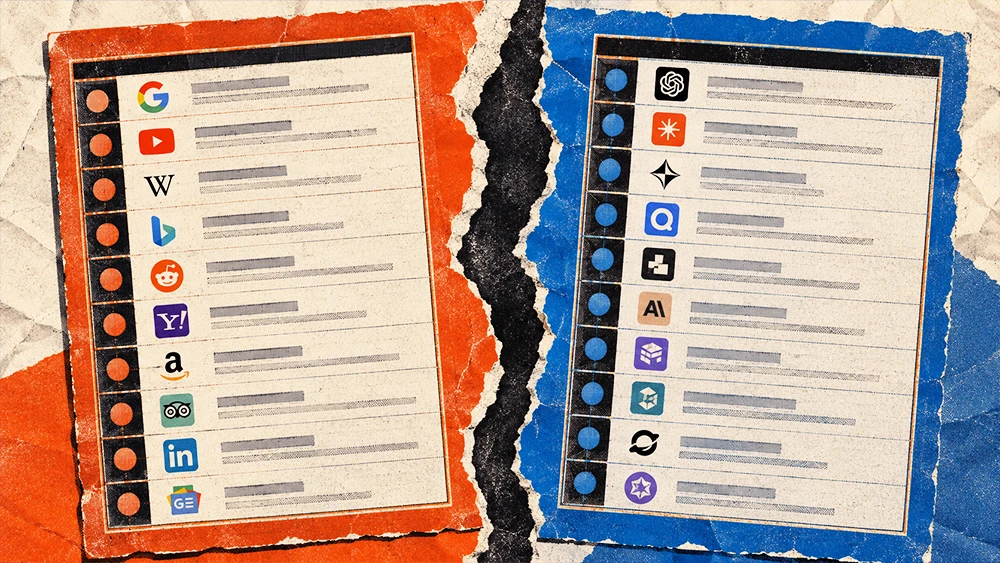
You can hold the number-one blue link in Google and never surface in an AI answer. You can be absent from Google's top 100 and still be a regular citation in ChatGPT. Rank and citation have come apart, and the gap is structural, not a glitch worth waiting out. A growing share of buyers now put their question to an engine before they scan a list of links, and that engine is working off a different scoreboard.
The lazy read is that this kills SEO, that the backlink is dead and everyone should re-platform their content for the machines. That read is wrong, and why it's wrong is the more useful story. What's happening is that a second discovery system has switched on next to the first one, a separate layer running its own ranking function on its own signals. The mistake isn't optimizing for search, it's treating one scoreboard as the other.
How AI Retrieval Actually Works
Classic Google ranking is a link-and-authority system descended from PageRank. It scores a page largely on backlinks, domain authority, and on-page relevance, then hands back ten ordered links. An AI engine doesn't rank documents that way. Ask ChatGPT, Perplexity, or Google's AI Mode a question and it retrieves, then generates. It often breaks the question into sub-queries, pulls the passages that sit closest in meaning to each one, and stitches an answer with citations attached to the passages it actually used. Semantic fit, not link count, decides which passage gets pulled. That one architectural difference is why the winners diverge.
Search Atlas put numbers on it. In a study of 104,855 local "near me" citations across six engines over five weeks in late 2025, semantic relevance was the strongest, most consistent predictor of where a business got cited, correlating around 0.18 to 0.19 on OpenAI, Grok, and Google's AI Mode. Domain authority ran the other way. Its correlation with citation position was negative, meaning the classic link-equity signal wasn't merely weaker for this layer but occasionally worked against a page. The honest boundary on that finding, the one most hot takes skip, is that it covers local "near me" queries only. It's a real anchor, not a license to declare backlinks dead for informational or B2B search. Search Atlas's broader comparative pass, roughly 5.5 million model responses across 748,425 queries, exists precisely because one query class can't speak for all of them.
Why the Engines Disagree
The second surprise is that the engines barely agree with each other. 5W's State of AI Citations analysis, built on more than 680 million citations across ChatGPT, Claude, Perplexity, Gemini, and Google AI Overviews, found Wikipedia supplying about 47.9% of ChatGPT's top-ten source share and Reddit about 46.7% of Perplexity's, with only around 11% of domains cited by both ChatGPT and Perplexity. Two engines drawing on almost entirely different source pools isn't a rounding error, it's a different retrieval function reaching for different material. Dominating one engine tells you almost nothing about the next.
This isn't an academic distinction, because money is following the citations. 5W's Ronn Torossian frames the stakes as "Citation Share is the new market share," noting that inside the engines now answering buyers' questions, the Wall Street Journal, The New York Times, and Bloomberg don't crack the top twenty. The reporting stack strains under that. "We rank number one" stops proving demand capture the moment the buyer is asking a chatbot instead of scanning links. And the new layer monetizes on different terms. ChatGPT's ad business reportedly reached roughly $100 million in annualized run-rate within about six weeks of its early-2026 launch, at a 0.91% click-through rate against a Google search benchmark near 6.4%. The spend is chasing in-conversation attention, not the click.
Running Both Scoreboards
None of this argues for abandoning the first system. Plenty of demand still lands on blue links, and the near-me data is explicitly local. The move is a portfolio, not a pivot: keep the classic-SEO engine running for the traffic that still converts there, and stand up a separate AI-visibility practice measured in its own unit, citation share per engine, because roughly 11% overlap means a single blended cross-engine score hides more than it reveals. The guardrail comes from Eli Schwartz, author of Product-Led SEO, who warns that chasing raw AI citations could become as hollow as chasing the number-one ranking once was. In this layer, off-site mentions and earned trust increasingly do the work the backlinks of the last decade used to. Citation share is a leading indicator, not the scoreboard. Measure it against pipeline rather than a vanity count, or you'll have rebuilt the old trap one discovery layer over.
Rank is not citation. Two systems now decide whether the world finds you, and they don't share a scoreboard. Run both, and grade each on its own terms.
Don’t miss the next one.
Get our latest pieces in your inbox. Leave whenever you want.