68% of Searches Now End Without a Click. Google Kept the Traffic.
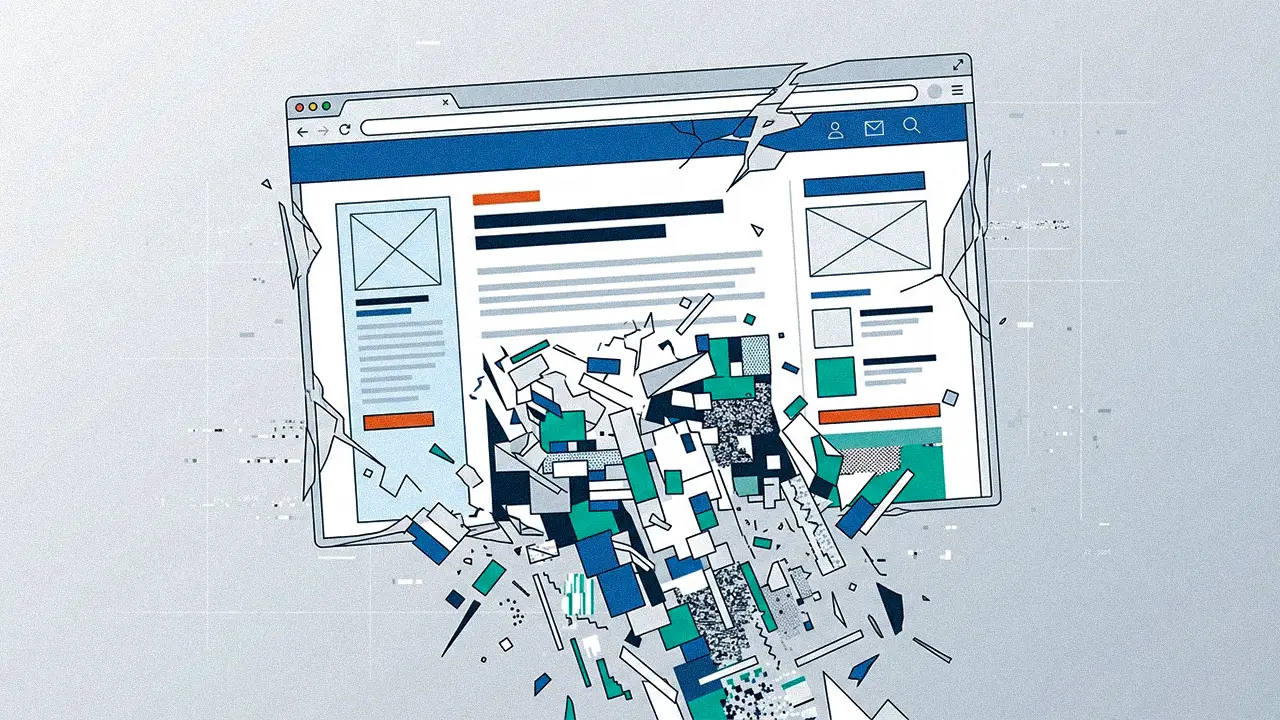
Zero-click searches hit 68% and independent studies agree the traffic is draining. "Search is dead" is the lazy read; the honest one is that the value moved on-SERP, and the only company that can prove where won't publish a number.

If this caught your attention, that’s not accidental.

The best editorial systems don’t happen by accident. Outlever builds them.
In the first four months of 2026, 68.01% of U.S. Google searches ended without a single click to anywhere on the web, SparkToro's latest clickstream study found, up from 60.45% two years earlier and roughly 45% a decade ago. Search is very much alive. The click is collapsing while the reader stays put.
People are running more searches and asking longer, higher-intent questions. Zero-click behavior traces a ten-year arc that ran through featured snippets, Knowledge Panels, and local packs, a shift already well underway when language models arrived, and SparkToro itself cautions that its data can isolate only so much of the latest jump to AI features specifically. The trend is structural. Google spent a decade learning to answer the query on its own page, and AI Overviews are the accelerant riding on top of that machinery.
For anyone still competing for rank, the mechanics are brutal and well measured. The top organic result draws about 58% fewer clicks when an AI Overview appears above it, Ahrefs found, a gap that widened from the 34.5% it recorded in April 2025. Pew Research Center's July 2025 study of 900 U.S. adults measured the same collapse from the user's side. People click a traditional result 8% of the time when an AI summary is present, against 15% when it isn't, and they click a link inside the summary itself just 1% of the time. Three different panels running different methods point the same way.
The Value Moved to Google's Own Surfaces
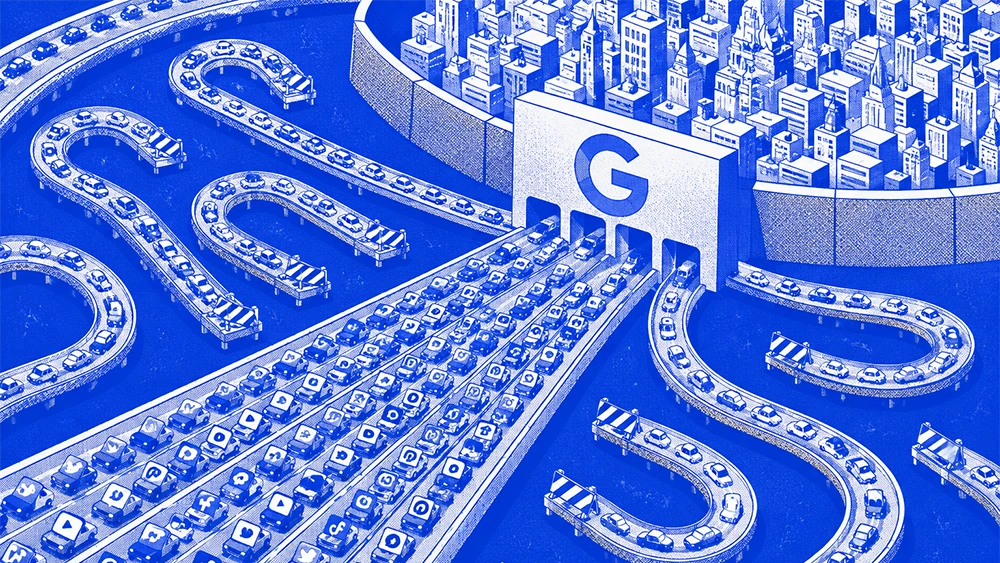
Most of the value never leaves the results page, where Google answers the query with publishers' own content and keeps the visit. The rest is more pointed. Google increasingly cites itself. Profound's analysis of more than 32 million AI Mode results found google.com's citation share grew 8.4 times between mid-April and the end of June 2026, making it the second-most-cited domain in Google's own AI Mode, driven almost entirely by Business Profile and Product Knowledge Panel pages. Search Engine Land's Danny Goodwin reported that same self-citation drift from Profound's data, and SparkToro's own numbers show the share of searches that lead to another Google search up 7.2 points since 2024, users burrowing deeper into Google. Irina Maltseva, the founder of Seen, wrote on LinkedIn that Google "isn't a search engine anymore. It's a walled garden that answers your questions so you never have to leave."
Google's rebuttal to all of this is a blog post. In August 2025, Liz Reid, the head of Google Search, wrote that total organic click volume to websites has stayed "relatively stable year-over-year" and that the clicks Google sends are higher quality. The post carries no percentage, no comparison, no dataset. It is a claim. Google separately dismissed the Pew findings as "flawed methodology and skewed queryset," even as Fortune reported the wider charge that AI Overviews are "cutting off the oxygen" to the web. Consider who is asking whom for trust here. The three studies Google waves off are independent and published their methods. The one party that can actually measure organic clicks across all of Search, Google itself, asks the rest of the industry to take stability on faith. When the house holds the only complete ledger and keeps it closed, the burden of proof is the house's.
Re-Instrumenting for AI Search
The migration is real and badly measured. Operators feel it in the pipeline and struggle to prove it. Alex Halliday, the CEO of AirOps, calls "Other" the most expensive word in marketing analytics. A buyer asks ChatGPT to compare vendors, books a demo ten days later, and the CRM logs the whole thing as Direct. "We think AI Search is influencing pipeline. We just cannot prove it," he wrote. "That sentence does not survive contact with a CFO." Some operators report the mirror image, flat Google traffic alongside rising pipeline as a thinner stream of higher-intent visitors converts better. That optimistic half, the "higher quality" clicks, remains mostly assertion too, coming from Google and the agencies alike. Manick Bhan, founder and CEO of Search Atlas, describes the shift on LinkedIn as search splitting in two, Google on one side and the direct answers from ChatGPT, Gemini, and the rest on the other, with his read that "most brands are invisible in the second one." The correction lands in one move: teams grade themselves on session volume today, and the two things that decide outcomes now are whether a brand is cited in AI Overviews and AI Mode at all, and whether the smaller stream converts harder than the flood it replaced.
That lost traffic stays gone, and the search box has finished its run as the destination. The audience arrives with the same questions and collects the answer where it stands, on Google's page. The teams that re-instrument for that world, tracking whether they're cited and whether the survivors convert, pull ahead of the ones still scored on sessions and calling the decline their own fault. The click was only ever a proxy for attention. Attention has moved, and the click is now the most expensive way to measure the wrong thing.
Don’t miss the next one.
Get our latest pieces in your inbox. Leave whenever you want.