Why One Brand Earns a Different AI-Visibility Score From Every Tool
The same brand can earn several different, all-defensible AI-visibility scores, because the tools measuring it don't count the same things. Before you trust a dashboard number, or quote one, find out what it actually measures.

If this caught your attention, that’s not accidental.

The best editorial systems don’t happen by accident. Outlever builds them.


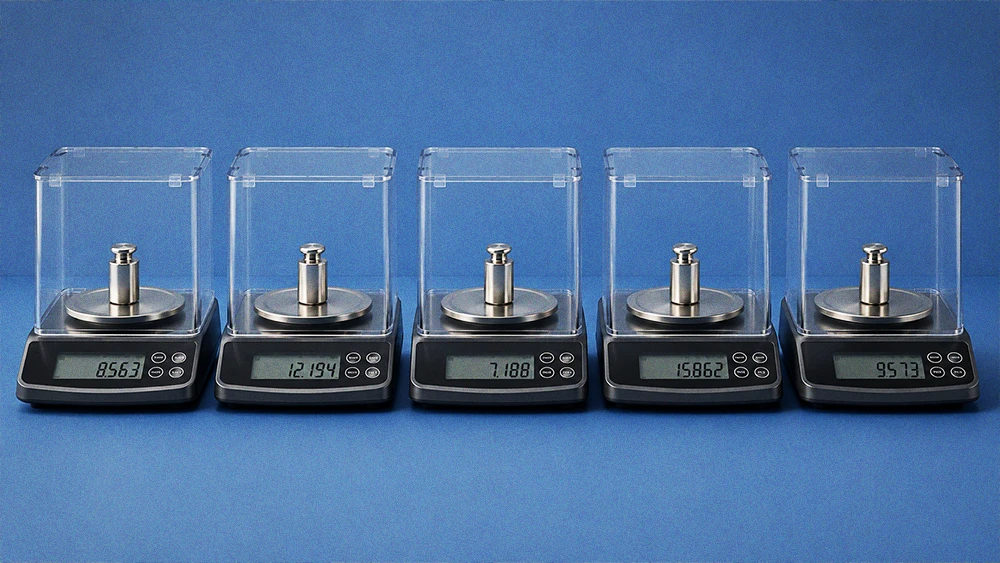
Take one brand, run it through the AI-visibility tools that marketers are lining up to buy, and you'll get several scores that all disagree, every one of them defensible. To one tool, your brand turning up in an AI answer is an impression, worth the search demand behind the prompt that surfaced it, so a mention inside a high-demand query counts for far more than a mention inside an obscure one. To another, that same appearance is one capture in a batch pulled straight from the browser and re-run the next day. To a third, the live answer isn't the thing being measured at all, because it polls the model directly to see how readily the model names your brand in the first place. Same brand, same week, three accountings that won't reconcile, and no referee to say which one is right.
The easy conclusion is that the category is broken, that the numbers are invented, that one tool is buggy or the whole field is guesswork. That conclusion is wrong, and the reason it's wrong is the more useful story. Read the methodology docs, which the vendors publish, and you won't find bugs. You'll find a set of companies that each made a defensible choice about what to count, and landed on different numbers precisely because those choices differ. What separates the scores is definition, not error.
What the Percentage Measures
Start with the thing the percentage is a share of, because the tools don't agree on even that. Some count an impression as the summed search volume of the prompts your brand appears in, which ties your score to search demand rather than to how often the machines actually name you. Others build a different fraction, your brand's mentions divided by every brand's in your category, weighted by how often and how high you land. Others report something plainer, the share of relevant answers that mention you at all. Three numerators, three different questions, and a buyer reading only the headline number rarely knows which one they paid for. As Search Engine Land's Dan Taylor writes, every one of these numerators sits over a hidden denominator, because the universe of prompts a tool could sample is effectively infinite and each vendor scores against its own small, undisclosed slice of it.
Where the Prompts Come From
The inputs feeding those numbers diverge just as hard. Some tools throw out search data and assemble their prompts from real-user conversations, then capture the answers from the browser instead of through an API, on the reasoning that what renders in the browser is what a customer actually sees, and they re-run every prompt daily because the platforms won't hand back the same answer twice. As Metehan Yesilyurt writes in a review of how these tools collect data, whether a tool queries the model's API or runs a live browser session is the single biggest methodological difference between products, because the two can return different brand lists for the same prompt. Others point the opposite way, polling the model across thousands of prompts and scoring frequency against position, which measures the model's learned preference rather than any answer a real person received. Others work from a small curated test set, a couple dozen prompts on an entry tier. Others run whatever prompts you hand them. Different tools, different ideas of where a prompt even comes from.
Which Engines Get Watched
Then there's where each tool looks. No two cover the same set of engines, which by itself guarantees different scores for the same brand. One tool leaves a couple of the major assistants out of its default coverage. Another watches the big chat engines on its cheaper tiers and sells the rest as paid add-ons, so two customers on two plans of the same product aren't even watching the same universe. And the surface a tool skips can be the one that matters most, because the answer engine it ignores may be the one carrying the largest share of your customers' questions. A score that never looks at a given surface is answering a narrower question, whoever ships it.
How Often the Clock Ticks
The clocks don't line up either. Some tools re-poll daily. Some refresh most engines monthly on a rolling window. Some advise reading results as a weekly average rather than any single day's reading. So an alert that your visibility fell twelve percent this week can be a real move, or model drift between two daily samples, or nothing more than one tool having refreshed today while another is still averaging over last quarter. One analysis of ranking stability covered by Search Engine Journal found that a single reading is mostly noise, with a brand's position steadying only after dozens of cited answers and, in a few cases, never separating at all.
None of this makes the tools worthless. They're real instruments, and used honestly each one tells you something you couldn't see before, whether your brand surfaces when the machines answer, which way that's trending, and who's turning up in your place. The error is treating any single dashboard's number as ground truth, or benchmarking your figure against a rival's press-released claim to be number one in AI search, when the two were almost certainly measured on different bases. Before you buy a tool, or quote one in a board deck, know what it actually counts: the numerator, the prompt set, the engines, and the clock. A visibility score is an input to a decision you still have to make, not the decision itself. SparkToro's study of thousands of AI answers found the machines almost never return the same brand list twice, let alone in the same order, and its author, Rand Fishkin, concluded that any tool selling a "ranking position in AI" is "full of baloney." There's no referee here, and no prize for topping a leaderboard three vendors would score three different ways.
Don’t miss the next one.
Get our latest pieces in your inbox. Leave whenever you want.