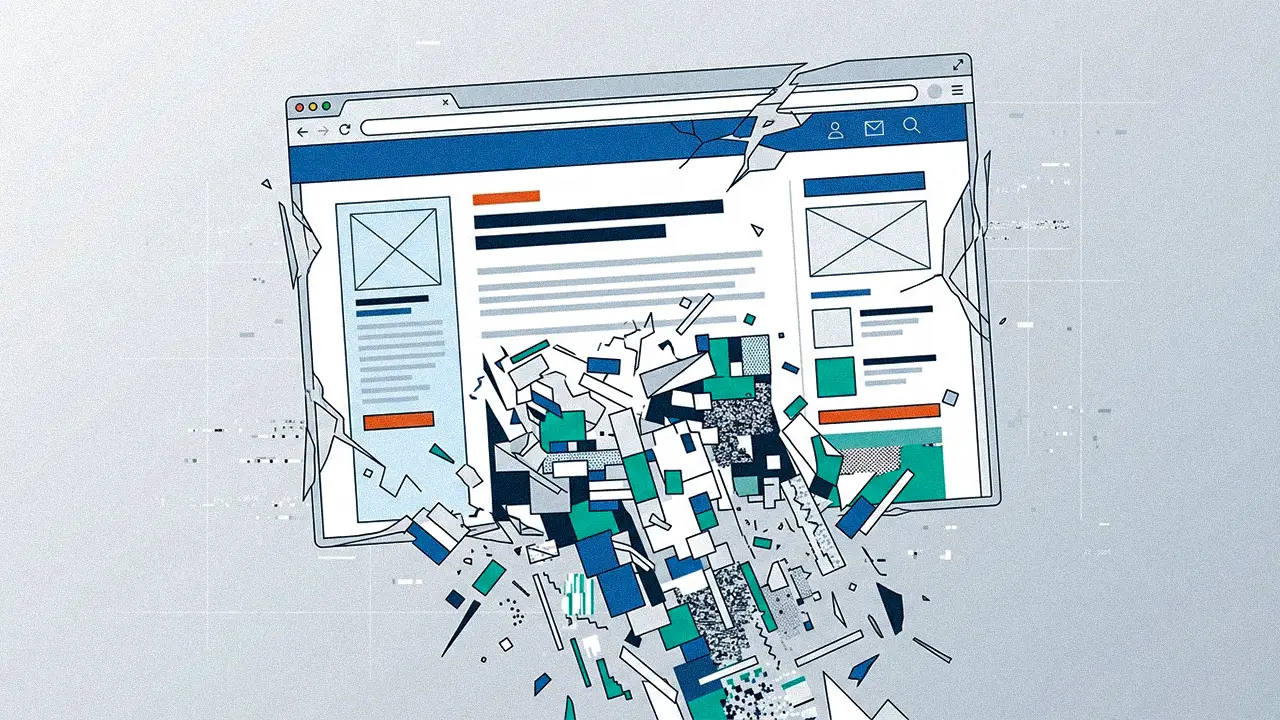
The Marketing Ramp Is Collapsing As Agentic AI Compresses Months Of Work Into Weeks
Mark Kasiske, Founder of i.Net Technologies, on why AI use alone isn't the differentiator, and how prompting, testing, and measurement separate results from noise.

Agentic AI is the greatest change that I have experienced in the entire time I've been in business.


If this caught your attention, that’s not accidental.

The best editorial systems don’t happen by accident. Outlever builds them.


The Marketing Ramp Is Collapsing As Agentic AI Compresses Months Of Work Into Weeks
Every few years, marketing gets a new tool that promises to change everything, and most of the time the promise is oversold. Agentic AI is different, and the marketers who treat it like just another automation platform are misjudging how much is actually shifting under them. The change isn't just that AI executes tasks faster. It's that the marketer's job moves from doing the work to designing the systems that do the work, then monitoring and continuously improving them. It's a different discipline, and the agencies that recognize the difference early will pull away from the ones still using AI to speed up the old workflow.
Mark Kasiske has been through his fair share of marketing industry transformations. He's the Founder and CEO of marketing agency i.Net Technologies, which he's led since 1997. Nearly three decades running an agency gives him a long baseline against which to measure the current moment, which is what makes his read on agentic AI notable.
"Agentic AI is the greatest change that I have experienced in the entire time I've been in business," he asserts. It's a strong claim from someone who's worked through the rise of Google, the mobile transition, and every algorithm upheaval in between, and he comes with examples to back it up.
From executing the workflows to designing them
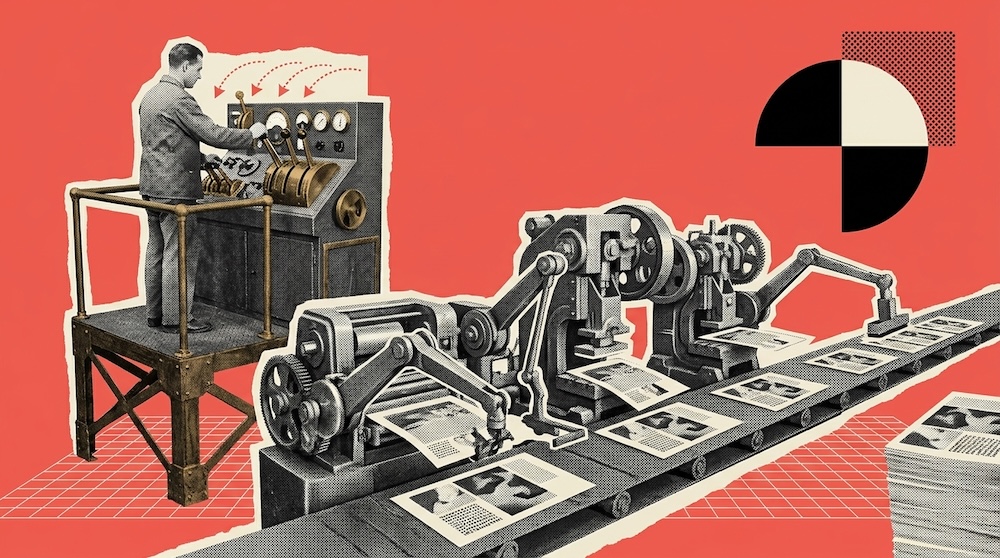
The core shift Kasiske describes is a change in what a marketer actually does day to day. The traditional model has marketers manually performing repetitive tasks: keyword research, content production, reporting, optimization, all done by hand, over and over. Agentic AI breaks that model by handling the execution, which moves the human up a level. "You're not doing the task anymore. You're building the system that does the task, then you're watching it, testing it, and making it better. That's a completely different skill set than what most marketers have been trained on," he says.
The distinction matters because it changes what expertise is worth. In the old model, value came from executional capacity, the ability to produce more content or run more campaigns. In the agentic model, value comes from design and judgment: knowing what to build, how to instruct it, and how to tell whether it's working. The marketers who can architect and supervise automated workflows become far more productive than those who can only execute, because their output is no longer capped by their own hands.
That reframing is why Kasiske sees this as more than an efficiency gain. It is a redefinition of the role, and the agencies that adapt their teams to it will operate at a scale the manual model can't match.
Results in a month
One proof point Kasiske offers comes from HammerCore Group, a demolition and construction company that's a client of his firm. A brand-new company with no established search presence, backlink history, or brand recognition would traditionally expect a long ramp before seeing meaningful traction. With the help of agentic marketing, Kasiske was able to achieve it in a month. "They can run up to three crews now because of the business that they've already gotten. That's what this technology makes possible when you actually know how to use it," he shares.
The example is instructive precisely because HammerCore was starting from zero. The speed of the results came from the agentic approach doing the work of building and optimizing a marketing presence at a pace no manual effort could match. It's a concrete illustration of the productivity redefinition Kasiske describes: the output wasn't limited by how much a team could execute by hand.
The rush is the risk
Kasiske's enthusiasm comes with a sharp caution. Businesses moving into agentic AI are, in many cases, moving too fast, adopting the technology before they understand how to use it well. The result is a lot of activity that doesn't produce results and a false confidence that using AI is the same as using it effectively. "Everybody's rushing in because they're afraid of being left behind, but just using AI isn't the differentiator," he points out. "The differentiator is knowing how to prompt it, how to test it, how to measure whether it's actually doing what you need. Most people are skipping that part."
The gap he identifies lies between adoption and competence. Deploying an AI workflow is easy. Building one that reliably produces good outcomes requires the discipline of prompting deliberately, testing rigorously, and measuring honestly. Those skills aren't automatic, and the companies that skip them end up with automated processes that scale mediocrity rather than results.
The competence gap is also where Kasiske sees opportunity. Because so many businesses are rushing in without developing the underlying skill, the agencies that invest in prompting, testing, and measurement can outperform competitors who assume the tool does the work on its own.
Search is moving to the LLM
The larger context that makes agentic marketing urgent is a shift in how consumers search. For the entire history of Kasiske's agency, SEO has meant optimizing for search engines, primarily Google. That assumption is now cracking as consumers increasingly turn to large language models to answer the questions they used to type into a search bar. "People are asking ChatGPT and other LLMs questions they used to ask Google,like‘Who are the best plumber near me?’and AI will only show them two or three businesses instead ofan infinitelist. If your marketing isn't showing up there, you're invisible to a growing part of your market," he says.
The implication for SEO and local marketing agencies is significant. Optimizing for traditional search results is no longer sufficient when a growing share of consumer queries never reach a traditional search engine. Agencies have to adapt their strategies to a world where visibility inside LLM responses matters as much as ranking on a results page, and the tactics for achieving that are still being worked out in real time.
That evolving landscape is exactly why Kasiske frames agentic AI as the biggest change of his career. It's not only transforming how marketing work gets done internally, but where consumers look and how they find businesses, which means agencies have to change both their operations and their targets at the same time. The marketers that treat this as a moment to rethink the discipline rather than a tool to bolt onto the old one are the ones positioned for massive gains.
Don’t miss the next one.
Get our latest pieces in your inbox. Leave whenever you want.