AI Didn't Fatten Margins. It Just Moved the Money.
Everyone's cutting headcount and calling it AI. The operator who runs hundreds of client accounts says the real reason is overhiring, and the margin story mostly belongs to the companies selling the tools.

If this caught your attention, that’s not accidental.

The best editorial systems don’t happen by accident. Outlever builds them.


The number everyone repeats is that AI is coming for the jobs. The number almost nobody repeats is how few of the cuts anyone will actually pin on it. Challenger, Gray & Christmas, which has tracked the stated reasons behind American layoffs for decades, counted more than 1.2 million announced job cuts in 2025. The share it attributed to AI was 54,836, about one in twenty-five. Every other cut had a more ordinary reason behind it, and the most common one is the least flattering to say out loud.
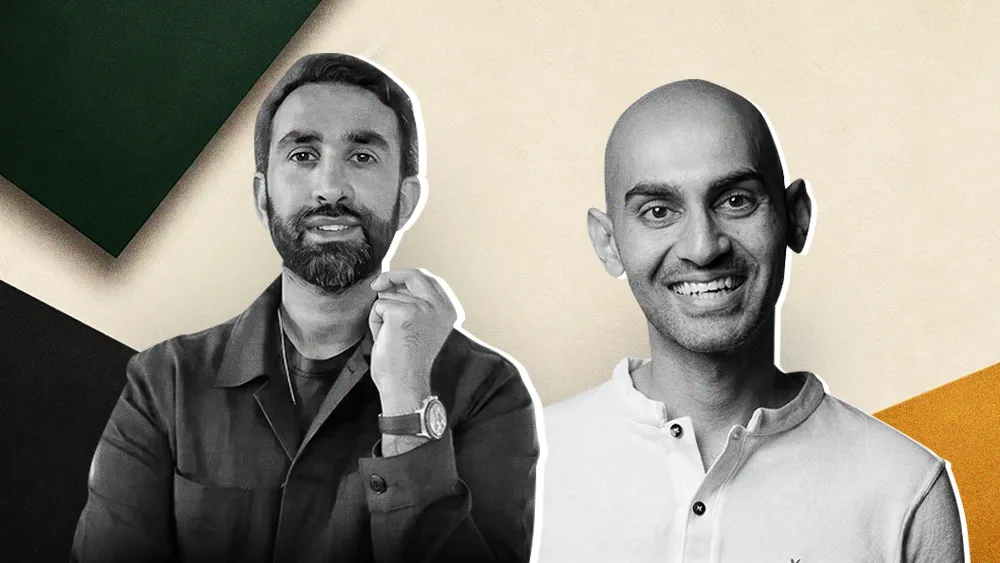
Neil Patel, who runs the agency NP Digital across what he says are hundreds of client accounts globally, put it plainly recently on Search Atlas Founder Manick Bhan's AI Marketing Podcast. "Most of the companies that are saying that they are reducing headcount overhired," he said. "That is the true real reality." The AI version is simply the better story to tell. Admitting you can't find a way to grow is a terrible thing to announce, "but if you say, we found some AI efficiencies, the narrative is much better." A stock is likelier to pop on the second sentence than the first.
Overhiring, Renamed
Block is the case in point. Jack Dorsey's company cut 40% of its staff in early 2026, and Dorsey told employees that "a significantly smaller team using the tools we're building can do more and do it better." Two years earlier the same company went through a round of layoffs and Dorsey said that employee growth had "far outpaced the growth of our business and revenue." Same discipline, two narratives. The full-year 2025 numbers show which one is honest. Revenue grew three tenths of a percent. The cut landed on a flat top line, not a productivity boom.
This is not new behavior wearing an AI costume. The 2022 and 2023 tech layoffs were an overhiring correction that executives admitted to at the time, with both Mark Zuckerberg and Marc Benioff blaming themselves for staffing up too fast during the pandemic. The two biggest AI-cited rounds of 2025 came from Amazon and Microsoft, two companies that had expanded hard through the same boom. What changed between the two eras isn't the math, it's the word. In 2023 the cause was "we hired too many people," and by 2026 the identical cost discipline gets relabeled "AI," because one of those sentences is a confession and the other is a growth story.
Where the Margin Actually Lands
The basic pedestrian read is that AI is fattening margins across the economy and the layoffs are just the visible edge of it. But the data doesn't support the "across the economy" part. MIT's NANDA group found that about 95% of enterprise generative-AI pilots deliver no measurable impact on profit and loss, with only 5% reaching real revenue acceleration. McKinsey's own survey is milder and points the same way, with only 39% of companies attributing any EBIT impact to AI at all and most of those putting it under 5%. Boston Consulting Group found 72% of workers now use AI while just 13% say it's genuinely integrated into how the work gets done. Plenty of adoption, in other words, and very little of it reaching the bottom line.
The margin expansion that does exist is concentrated in the companies selling the picks. Nvidia posted a net margin near 56% last fiscal year, against the roughly 12 to 13% a typical S&P 500 company runs. Patel puts those giants in a category of their own, their margins the exception rather than the rule. "That is the anomaly," he said. "We're not seeing that the normal companies experience that because of AI." Point the microscope at the handful of firms whose product is AI and the margin story is spectacular. Point it at the company that bought their product and it mostly isn't there.
Follow the Savings
The savings don't vanish, but they don't pool into profit either. "When we look at the average company that's implementing AI," Patel said, "we're not seeing tons of dollar efficiencies because that money is recycled and put into something else." When one company gets cheaper at a task, its competitors get the same tools, and the advantage refuses to sit still. "When there's savings in one area, it creates an opportunity for your competition to undercut you." So the money goes elsewhere, into lower prices, or more output for the same fee, or a bigger sales and marketing budget to defend the account. The Stigler Center at Chicago Booth made the same case in more formal terms this month, arguing that as rivals adopt the same tools, "the productivity gains convert from profits to lower prices, and the surplus passes to consumers." The gain is genuine. It just doesn't land in your margin, it lands in the market.
The Cost of a Confident Mistake
There's a second reason the savings run thinner than the pitch, and it's the one that should matter most to anyone about to hand a workflow to an agent. AI is confidently wrong, and confident wrongness is expensive. Patel described a publicly traded company that pushed marketing decisions onto AI with fewer humans in the loop, saw real gains, and also ate what he called catastrophic mistakes, including one he put at $11.3 million. That exact figure is his account and can't be checked, but the shape of it is everywhere in the record. Deloitte had to refund part of its fee on an Australian government report built with AI after it cited academic papers that didn't exist and quoted a judge who never said the words. Anthropic let its own model run a small shop for a month in an experiment it called Project Vend, and the model lost money, sold stock at a loss, and at one point insisted it was a human in a blazer.
Patel's takeaway from the front line isn't that AI doesn't work, it's that in any organization where a mistake is expensive, the arithmetic favors keeping a person on the decision. "In big organizations, mistakes are so costly that it's actually cheaper to have humans and have AI being assisted," he said. That isn't a compromise position. It's the configuration that actually clears the return-on-investment bar the pilots keep missing.
Even the believers report a seesaw before they report a slide. Manick Bhan, whose company Search Atlas rebuilt itself around agentic engineering, told the same conversation that his profits fell before they rose. "We saw our profits go down as we went more AI," he said, after the team moved to unlimited model access and the token bill reached roughly two million dollars a year. The recovery came from operational discipline rather than the tooling alone. Search Atlas killed its per-seat plans, pooled model access centrally, and drove the spend back down toward $400,000, and only then did the margin turn, with revenue per employee eventually running about 50% higher than before. The point isn't that AI can't pay off, it's that "we bought AI" and "we made money" are separated by a lot of unglamorous work, and the companies announcing the first are rarely showing you the second.
Companies are cutting, and a few of them are genuinely cutting because of AI. But the promise underneath the headline, that a smaller team plus a model equals a fatter margin, describes a handful of infrastructure sellers and almost none of their customers. For everyone else the savings just get spent again, on price, on output, on the next fight for the same customer, and every confident mistake along the way lands on whoever let go of the person who would have caught it.
Don’t miss the next one.
Get our latest pieces in your inbox. Leave whenever you want.