AI Can Accelerate the Research, but Customer Psychology Still Decides Who Converts
Get Uplift CEO Talia Wolf on why the brands pulling ahead in the agentic AI era are rebuilding customer understanding first and using AI to scale strategy, not stand in for it.
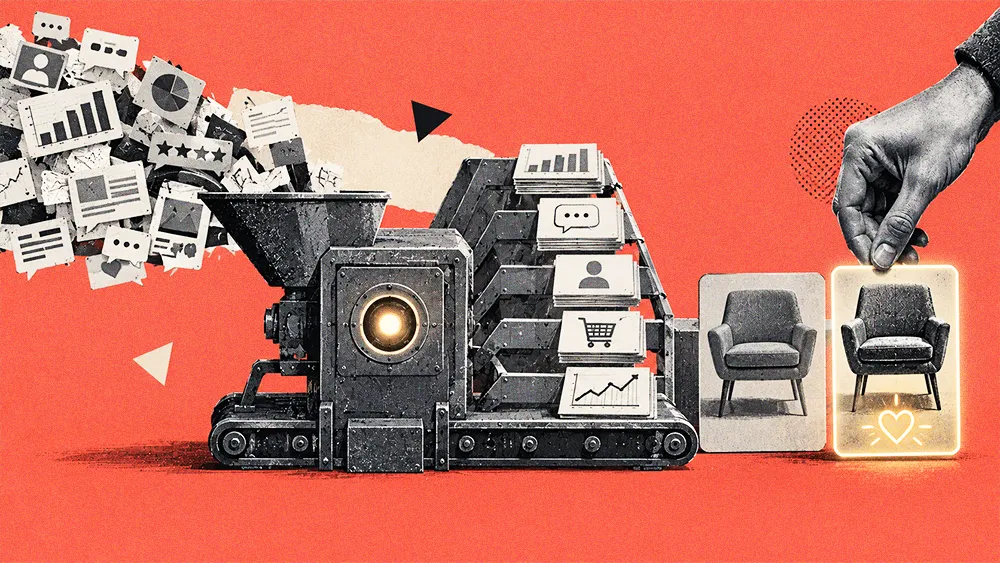

The future isn't prompt engineering. It's strategy. It's understanding customers. AI is here to stay, but you shouldn't outsource your brain to it.


If this caught your attention, that’s not accidental.

The best editorial systems don’t happen by accident. Outlever builds them.


Brands have never been able to ship marketing this fast. AI turns out landing pages, emails, and social posts at a volume that would have taken a full team a quarter, and executives are pushing to use every bit of that speed. The teams pulling ahead are moving in a different direction. They're slowing down at the front of the process, rebuilding a real understanding of why their customers buy, and letting AI scale that understanding rather than replace the thinking behind it.
Talia Wolf is the founder and CEO of Get Uplift, a conversion optimization firm built around consumer psychology and the emotional drivers behind a purchase. She's also the author of Emotional Targeting, and her core argument is that conversion rates move when a brand can name what its buyers feel, worry about, and want to become, which is exactly the work AI can inform but can't do on its own. "The future isn't prompt engineering," says Wolf. "It's strategy. It's understanding customers. AI is here to stay, but you shouldn't outsource your brain to it."
Where AI earns its place
The part of Wolf's operation that runs on AI is research and analysis. Her team combs through customer interviews, surveys, and thousands of conversations on Reddit, Quora, LinkedIn, and Facebook groups, wherever a client's buyers are making decisions, then uses AI to surface the recurring pains, the desires, and the things people tried before that failed them.
"AI has definitely helped us speed up the research," she says, work her team once did by hand in spreadsheets. The line she won't cross is handing the model the next step. Writing, creative, messaging, and the psychology underneath them stay manual, partly because the output falls flat when she's tried otherwise, and partly because brands now ask her not to use AI for the creative, worried that whole industries are starting to generate at volume and sound identical.
The output trap
The speed that impresses executives is also where Wolf sees quality collapse. Teams are shipping 20 landing pages a week and hundreds of posts, and most of it is thin because the input was thin. "What most companies know about their customers is demographics," she says. "They can tell you their age, their geographical location and gender, but they can't really tell you the real stuff and why people buy." Feed a model that and it returns bare-minimum work at double the pace. She calls it a hamster wheel, where output feels like the best it's ever been while results keep tanking, and it lands hard because buyers now live in a trust economy that compounds around strangers rather than brands. That's why they're on Reddit and Quora in the first place, and why output without a foundation reads as noise the moment it reaches them.
Back to the foundation
When a client arrives with tanking conversion rates after firing a marketing team and buying tools that were supposed to cover the gap, Wolf starts in the same place every time: research. Who do you serve, and why should they buy from you over anyone else, answered at a level deeper than features, pricing, or technology, since a competitor can match all three by tomorrow. From there her team audits the customer journey against what they've learned and finds the gaps where the story, the value proposition, or the audience is misaligned.
The journey she's auditing no longer sits on the website alone. Buyers form their opinion from how AI describes you, from Reddit threads, from video, and from what they read before they ever land on a polished page, and the strongest teams are optimizing that whole narrative rather than the homepage in isolation.
Strategy over prompts
Wolf's read on the next few years is that the advantage returns to the marketers who treat emotion and psychology as the work, not the garnish. A decade of being told to be data-driven, she argues, taught teams to optimize spreadsheets and forget that there are people behind the screens, and those people arrive already carrying the pains a brand is meant to speak to.
Technology keeps changing while human motivation doesn't, which is why she'd rather a marketer invest in the judgment AI lacks than in prompt fluency. AI stays in the mix as a tool that scales a strategy, provided the strategy, and the customer understanding under it, was built by a person first.
Don’t miss the next one.
Get our latest pieces in your inbox. Leave whenever you want.